Recommending – Dynasty Warriors: Origins
NOW, THIS IS A GAME.
I have been clamouring for a true Dynasty Warriors experience for a long while. While my experience with the main series is limited to a couple of the PS2 games (Dynasty Warriors 2 and 3), I have played several franchise spin-offs, such as Hyrule Warriors, One Piece: Pirate Warriors, Berserk Musou (disappointing), Attack on Titan, and Persona 5 Strikers.
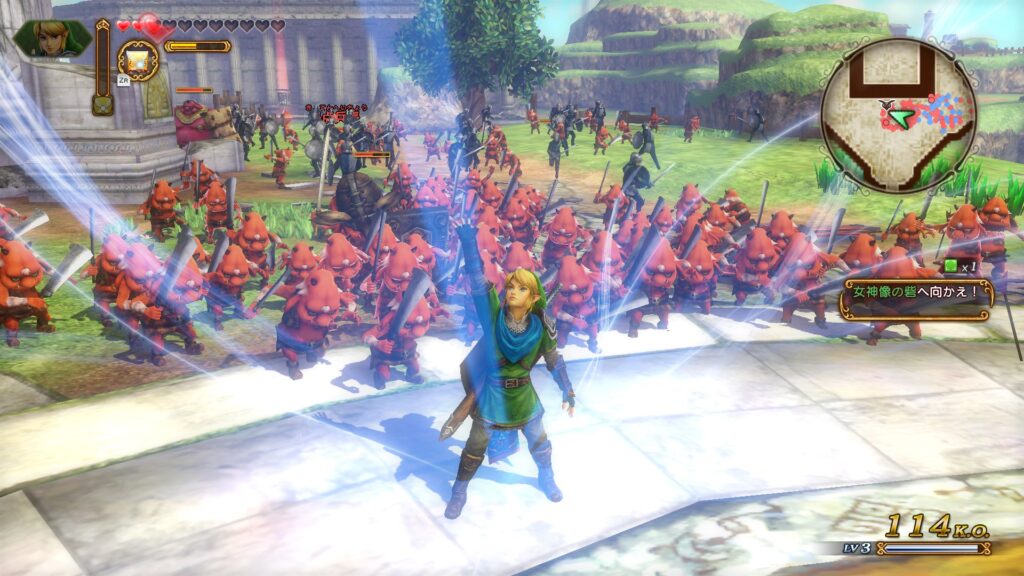
The original Hyrule Warriors was my introduction to Musou, and to this day, I don’t think either Age of Calamity or Age of Imprisonment come close to touching it. While the latter games had rich movesets and satisfying combat, they were, structurally, unconcerned with being Musou games in that they seldom employed decent strategy or decision-making in your journey through each mission. By the end of both games, I was completely burnt out. They felt more concerned with being action spectacles that were desperately stretched out into full games, and that’s not even commenting on their inconsequential storylines (but I won’t go into that here).
The original Hyrule Warriors, on the other hand, weaved a diverse Zelda roster and cheeky fan service with the typical, fast-paced action-strategy fusion that I have come to expect from these games. Capturing and maintaining keeps and protecting key allies is a core part of the experience, and will directly contribute to your victory. The maps are not deceptive in their linearity like the sequels; they are open-ended and require a lot of careful navigation and strategy in order to succeed in that wonderful balancing act that Musou should always invite. The “1 vs 1000” gameplay is about so much more than just mowing through grunts; it is about rising to the top in a large-scale battle, one of many in an ongoing war, and any great battle is won not just through sheer strength, but through intelligent strategy, as if you are outsmarting your opponent in a game of chess.
With me waxing poetic about the Musou formula, you might be wondering why I haven’t played more of the main series? Well, the more recent entries did not perform well critically. To be fair, the games do not appeal to everyone by nature, but even with that said… the writing was on the wall. Dynasty Warriors needed a refresh, and Origins does just that.
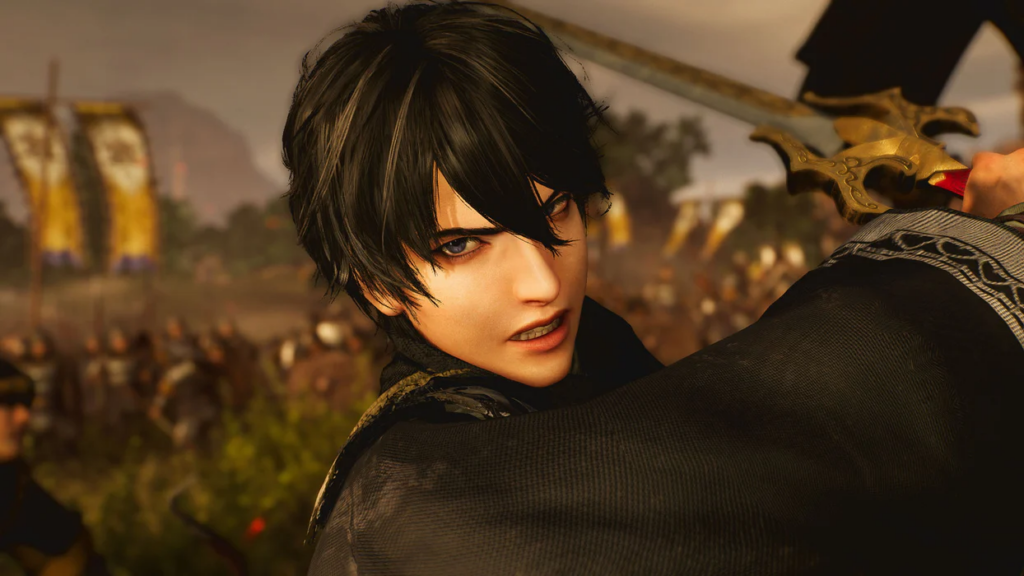
Origins features all of the hallmarks of the main series: The Three Kingdoms setting, and familiar characters, factions, and large-scale battles, but playing and progressing through the game feels fresh for a number of reasons.
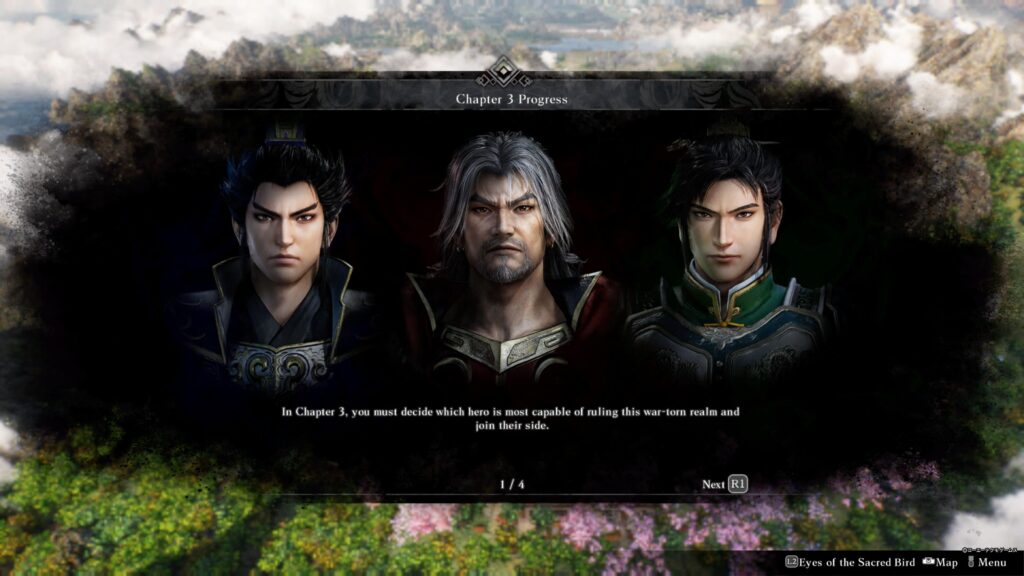
For one thing, you control an amnesiac silent protagonist (later known as Ziluan), and his story to reclaim his memories runs parallel with the unravelling tale of the Three Kingdoms, and as you advance through the story, you’ll eventually have the choice of aligning yourself with one of three factions. Without spoiling anything, each of these factions are established as compelling and complex in their passions and beliefs, to the point where I could have chosen any of them and been satisfied. I found them all to be both insightful yet misguided, and seeing their routes through to the end means finding out how they are able to unify their beliefs and their people. I would like to say more, but I can’t! Ultimately, this allows the player, as Ziluan, to define their own path toward peace – no longer confined by their past.
Peace… even though you’re slaughtering enemies by the thousands in each battle. Ludonarrative dissonance, or intentional irony? Who’s to say?
Perhaps the game’s weakest element is the sheer abundance of cutscenes and conversations, but they are easily forgiven in the face of how much fun I had with the game. Well, except for the bond conversations. Those I got sick of real fast.
But I digress. Additionally, the game features a branching narrative that ensures both post-game fun and replayability. You can carry your fully-leveled Ziluan into previous missions to find new routes, with certain battles practically requiring you to be a high-enough level in order to change the course of history, which is fun to chip away at after you’ve finished the main story. I mean, did you really think you could win against Lu Bu right away?
(If you’re unaware of the meme, you’ll learn reaaaaal quick in Chapter 2.)
As for the gameplay… Holy shit. The game opens with you controlling Ziluan, as part of an army, charging into an opposing army, the scale and impact of which I have not seen in a Musou game in a long time – possibly ever. This battle sets the tone for the rest of the game, one that not only contains the largest battles I have ever seen in a Musou game, but one that combines the rich movesets seen in the more recent Musou spinoffs with the large-scale decision-making that I have been craving for ages – all decorated with stellar, pulse-pounding presentation through immaculate sound design, gorgeous visuals, and that trademark hard rock music in the background.
Ziluan can wield multiple weapons and equip various arts in order to both mow through hordes of soldiers and make beefier units stagger, essentially consolidating the multiple characters and their weapon types in previous games into a single character that you can gradually level up as you experiment. The more you use specific weapon types, the more moves and arts you’ll unlock for those weapons. You can also purchase arts at shops around the overworld, and the arts in particular invite various ways to build combos, something that is essential to taking down the toughest enemies in this game (like good ol’ Lu Bu, and Gan Ning). And then, of course, you have the Rage mode and Extreme Musou moves. It results in a saucy, freeform combat system where you’ll be swapping out weapon types and arts depending on the circumstance, and it is one of the most satisfying and rich combat systems I’ve ever seen developed for a Musou game. Every time I heard Ziluan yell during one of his special moves – “HAAAH!” – I felt a dopamine surge. The same could be said for a lot of what this game does in combat, really.
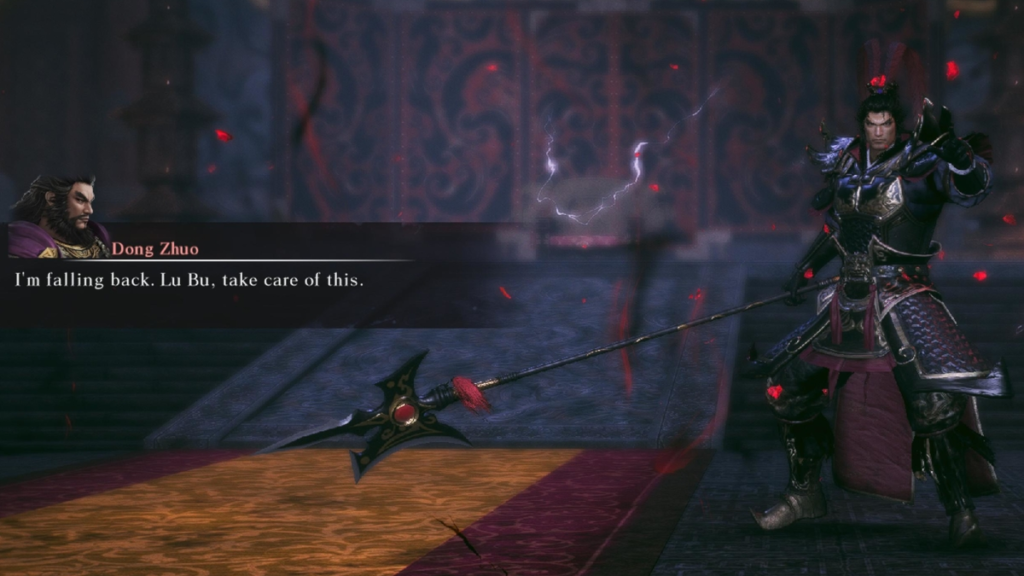
Of course, I could find expertly designed combat systems in a few other Musou games. What sold me on this game beyond its progression systems was its return to form in strategic battles. I mean, it’s no wonder these games kept getting those tactics expansions called Empires, and it was nice to actually use my brain again in a fresh revitilization of the main series.
For starters, battles are driven by the morale system. Whenever either side kills an officer, wins a duel, captures a keep, or makes a breakthrough in battle, morale will shift toward one side. With higher morale, other units across the battlefield are far more likely to win their own battles, something that is necessary if you don’t want to spread yourself too thin and run all over the place making sure your officers stay alive. In order to tip morale in your favour, you’ll need to maintain keeps and kill rogue officers all across the battlefield. All of this, while making sure that your own commander is safe, because if he falls, then so will you. It will take patience, and sometimes the opposing army will be overwhelming in tipping morale in their favour, but it makes for intense battles across the entire game, in which you feel like your spreading yourself as thinly as possible in order to stay in control, and I welcome this with open arms. This is exactly what I’ve missed in Musou for so long.
Additionally… You have to remember that your victory conditions are your ultimate objective in each of these battles. If you kill the commander, the rest of the army will crumble. This means that you can get creative and find routes to that commander in a multitude of ways. You could fuel your army’s morale… or you could brute force through an ocean of soliders – some of them lined up, row upon row touting shields – to reach Dong Zhuo and fight him directly. You will probably get folded if you attempt this (like I did) because every single officer will gun it for you, but other times – your goofy plans might succeed! There was a time where I wasn’t doing so hot in morale, but I noticed I was adjacent to the enemy base, and if I cleared out the officers at one of their gates, I could storm in and try brute-forcing the battle with the commander. It wasn’t easy, but I broke in, hard-focused the commander with combos, and eventually cleared the mission without having to complete the vast majority of its gradual objectives. Moreover, the game accounts for this sometimes! I can’t remember which mission this was, but I chose to work my way around the back of the enemy base, and I found a secret entrance where the commander was no well-defended, which skyrocketed my army’s morale, and I easily overpowered the commander. It’s hard to eloquently describe just how consistently satisfying open-ended strategy is in Origins, but it is far and away the thing that elevates its story and combat to such great heights.
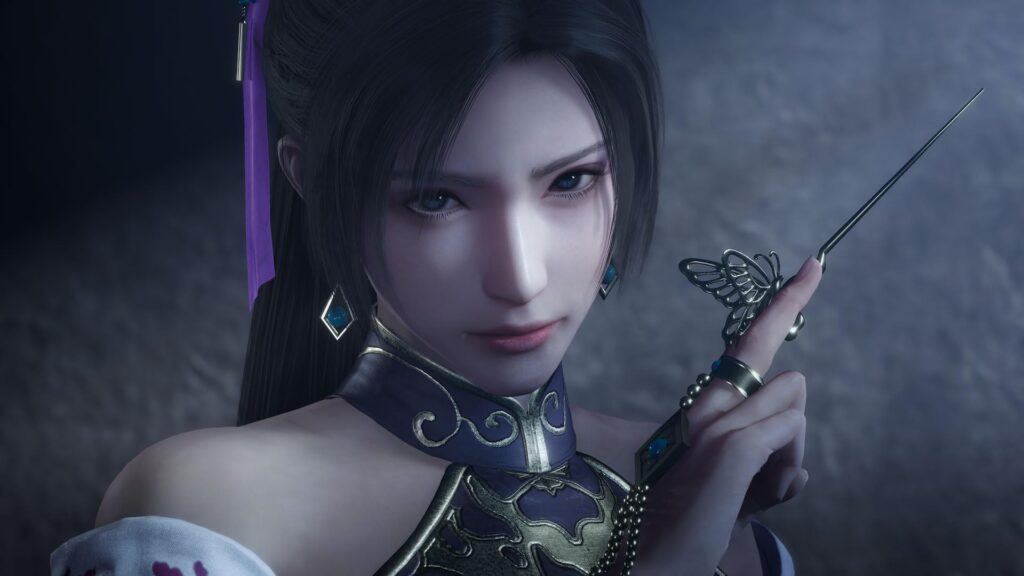
Needless to say, Origins is a return to form for the franchise. This feels like a generational Musou game, one that will introduce new people to the series in droves, one that people will consistently cite as their introduction to Musou, and I am confident it will remain a popular favourite for years to come. I am beyond happy that Koei Tecmo scrapped their original plans for Dynasty Warriors 10, as this was an incredible outcome. If you have any interest in the Musou formula whatsoever, buy this game.
Hey Liam. Are you looking for a game recommendation?
As an old school fan of the serie (Origin is my first musou since DW5), I was not convinced at the solo protagonist, and as you said the bonding scene are kinda cringe, but damnit the whole thing works!
I enjoyed the breath of choices you can actually make in the overworld AND in every battle is crazy. Even the story manages to surprise, which is crazy on a serie with over 20 game in the same story.
Great writeup, definitly agree!