23 Years Later, SSX 3 Is Still Unmatched
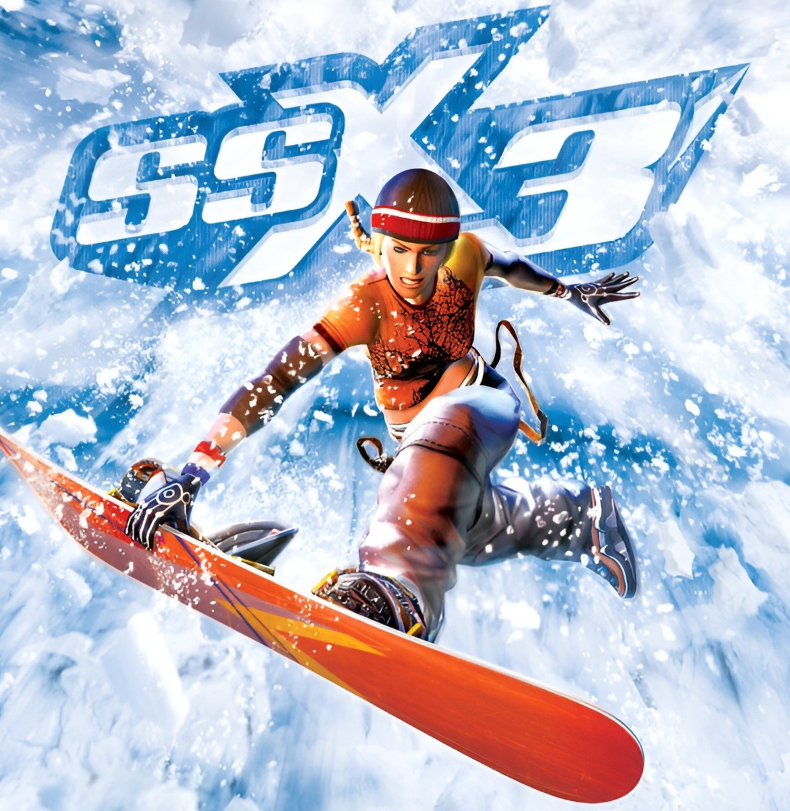
Before you begin reading this, it is imperative that you put on some Yellowcard. Preferably, the song Way Away, off their album Ocean Avenue.
While listening to that, take a look at this gif.
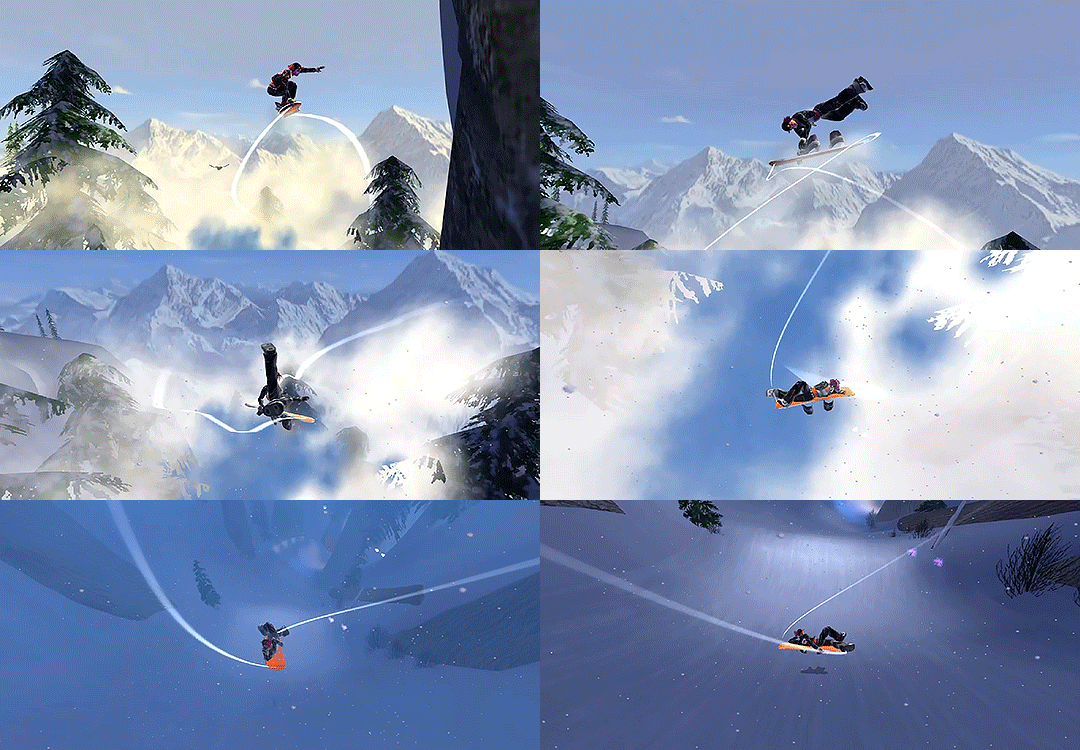
Congratulations. You have been transported back to 2003.
My exploration of SSX 3 in my PlayStation 2 Retrospective simply did not do it justice. Frankly, I sucked at the game from the moment I first played it, right up to just this year. It is a delicate dance, as you have to measure your airtime carefully as you perform Ubertricks and string manuals together to keep your combo timer going. That said, when you are able to pull off crazy trick combinations and launch yourself off of the mountain, knowing full well you’re about to net yourself a ludicrous amount of points – you will experience one of the most liberating and exhilarating rushes of dopamine a video game has ever been able to provide. SSX 3 is a masterclass in balancing solid, skill-driven mechanics with stylish, player-driven spectacle.
On top of this, it felt like the culmination of what EA Canada (now EA Vancouver) had been working towards with this series, with its massive mountain that could be shredded in one sitting – from top to bottom – and attention to detail and life in its atmosphere as you experience what I imagine heaven looks like for snowboarders, all accompanied by music that provides a perfect snapshot of the era the game released in, and an embodiment of the game’s spirit. Keep that Yellowcard playing in the background!
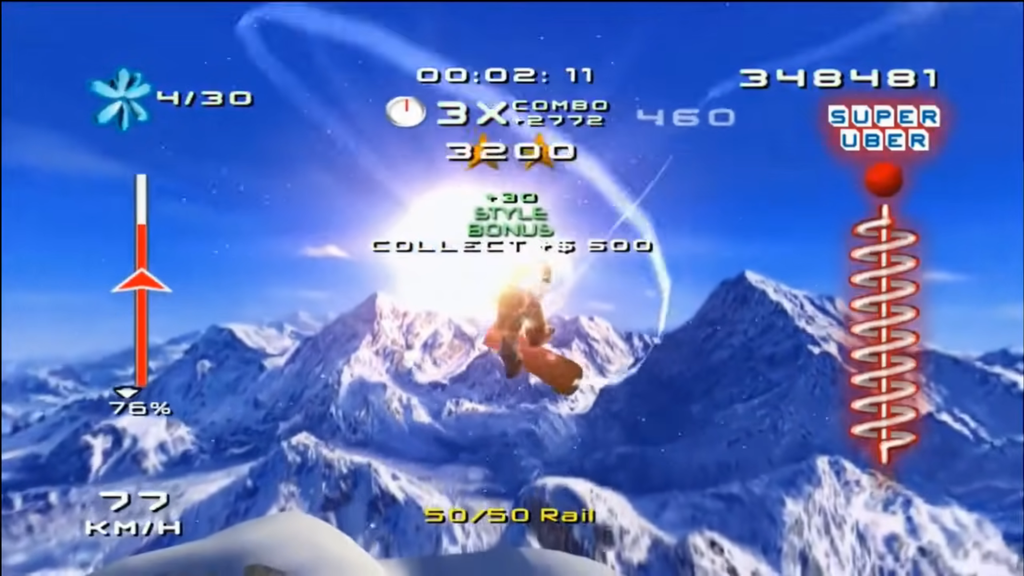
For those of you that have never played this game (or series), you can think of them like downhill versions of Tony Hawk’s Pro Skater. Extreme sports games back in the late 90s and early 2000s followed an arcade formula of maximizing points, and SSX was no exception. What made it stand out, even in its first game, was its ability to give the player full control over such gorgeous and exaggerated snowboarding physics… should the player be able to master them.
SSX 3’s controls indeed take some time to master. All four shoulder buttons (at least, on the PS2 version) can perform tricks, and you can press them in different combinations to perform different tricks, all while performing rotations in mid-air with the D-Pad. The more points you rack up, the more your Uber meter fills up, and it has three “zones,” each allowing you to perform more insane, gravity-defying tricks, as you spin and flip your board in impossible ways, all while being able to spend your meter boosting in case you want more speed when going off of a jump. In contrast to the early Tony Hawk games, SSX 3 in no way aims to be a realistic depiction of snowboarding, instead taking full advantage of the medium to create and enable a dreamlike version of snowboarding that makes for an endlessly fun and dangerously addictive game.
Like I alluded to earlier, it took me a while to truly master SSX 3, but the thing that pushed me to finally take that step was watching Daggy898 play this game. I saw what was possible when this game had been mastered; Daggy made this game look like one of the coolest things I’d ever seen. So, I took it upon myself to improve at the game. One thing that helped me along the way was SSX 3’s auto-correct mechanic. Essentially, when you release the D-Pad buttons at any point in mid-air, your character will automatically correct themselves in mid-air so that they are in an optimal landing position, though they will still take time to arrive at that final position, so you can’t rely on it to save you every time. Timing your tricks and landings is key to succeeding in any of this game’s events, and once you feel like you have a firm grasp on that timing, you can start taking risks and performing more daring and extravagant tricks – the core essence of what makes SSX 3 fun.
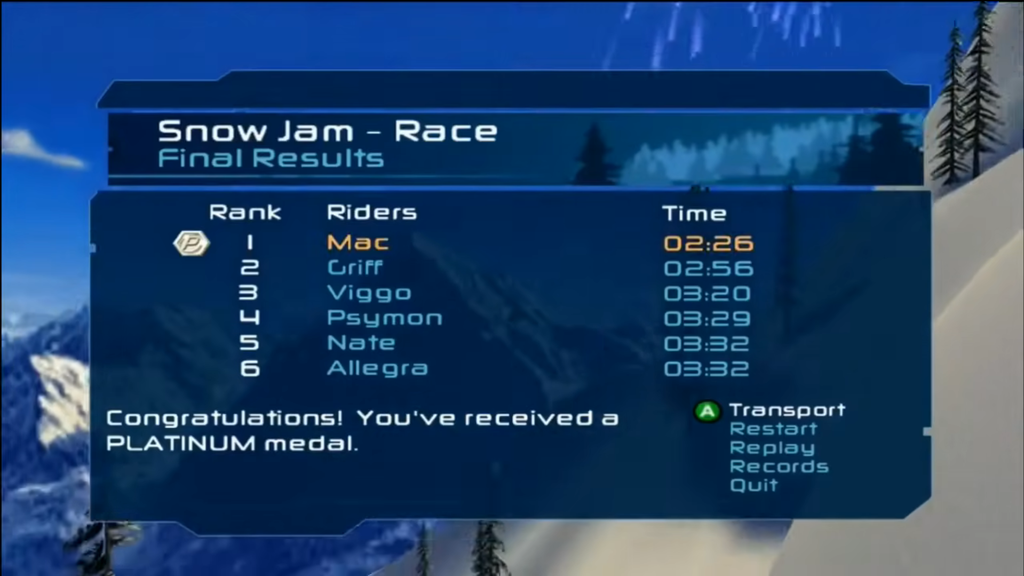
My journey eventually led to me discovering that events in this game can award you platinum medals. The game does not tell you what score you need in order to obtain these as far as I know, as they are simply designed for bragging rights, but they also feel just as much like tangible evidence of my own mastery over this game’s beautiful mechanics and controls.
Right, so I’ve gone on at length about how the compelling gameplay itself tends to evoke this dreamlike feeling, but it is dreamlike in its setting and its realization of its world as well. Your descent down the mountain won’t just take you death-defying tracks, but also harsh weather conditions, avalanches, caves, steep drops, and towns and cities that have been almost comedically snowed in and carved out for those competing in SSX, all while being surrounded by mountains as far as the eye can see. Seriously, the thing that completes this game’s atmosphere for me is its backgrounds, quite literally making SSX 3 feel heavenly. There are no signs of civilization beyond this mountain. As far as you know, this mountain, as well as all other mountains that you can see, are your world.
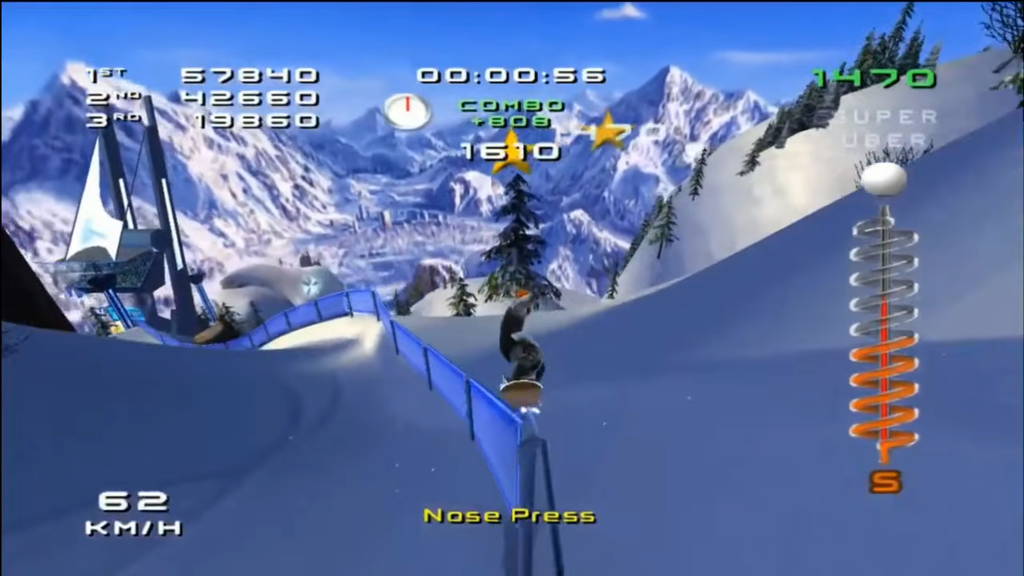
Another element that completes SSX 3’s atmosphere is Radio BIG, hosted by DJ Atomika (Mark Hildreth). Some of you might know him better as the host of Crash FM in Burnout Paradise. To me, his voice seems to embody what the 2000s felt like when I was growing up. His delivery throughout the game feels effortless and casual, and he chats about the competition and introduces each song from a shack somewhere on the mountain, pulling records off the shelf as if he is in this heaven with us. SSX 3 also features dynamic music stems depending on your performance out on the mountain. As long as you are in Uber, the vocals will stick around, and the music muffles itself mid-jump so you can focus on tricking, spinning and landing, and when it kicks back in the moment your board hits the snow again – it is euphoric.
There’s no pressure to do any one thing in particular in SSX 3. The game doesn’t have an ending of sorts, aside from, debatably, the All-Peak Jam, but the credits don’t roll afterwards. You can just keep playing and unlocking everything, further elevating its transcendental vibe. You can spend your time in this snowboarding sandbox tackling events in any order. You can rack up money in a number of ways, gradually unlocking each peak with your character of choice, levelling up their stats for easier combos, customizing their looks to your liking, and even unlocking a wealth of bonus material and secret “cheat” characters, as the game calls them. The beauty of all of this, however, is the freedom at play in doing so. You can focus on racing opponents, you can take on runs down the mountain, show off in half-pipe events, or just spend your time collecting snowflakes, taking on miniature challenges, and practicing your general combo potential down any portion of the mountain you so choose, and these portions flow seamlessly into other portions of the mountain. There are transitional areas that you can use to visit the lodge or take on events, but these are welcome. SSX 3’s claim to fame is that you can start from the top of the mountain and ride to the bottom without a single loading screen, but as much as that is a technical achievement in and of itself, it is moreso a testament to the design of the game. In the same vein as Burnout Paradise years later, the same mountain that you can freely explore and ride down is the same one that events revolve around, and you can freely practice and improve in the same space where you are challenged by the game.
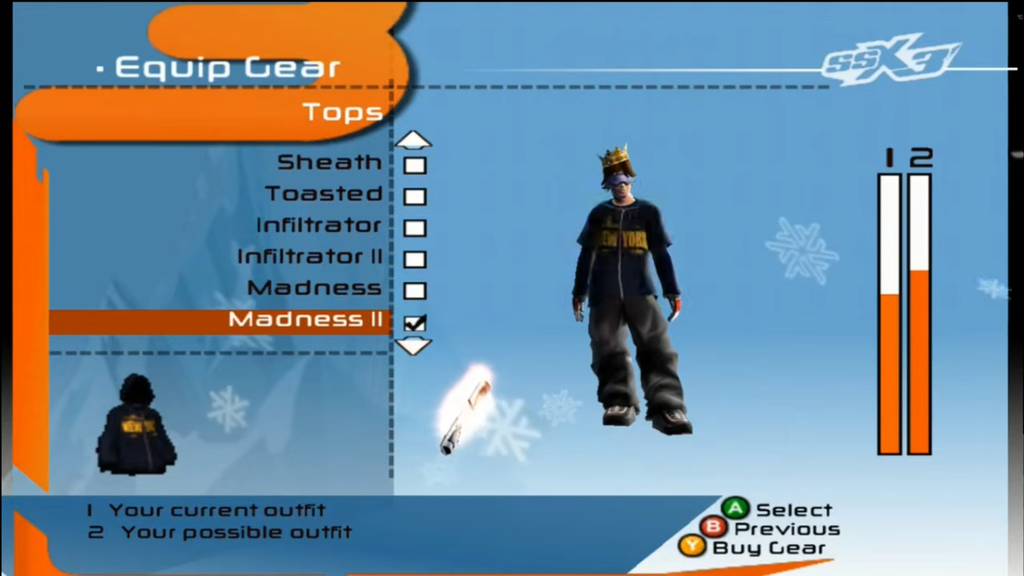
The fact that you are free to choose, and that there is nothing pushing you forward other than your own enjoyment and appreciation for it, is key to this game’s impact. Think about how many AAA games today push for consistent engagement, giving players so much to do and helping the player along in eventually finishing them, whereas SSX 3 proves that all a game needs to be in order to compel players to all of these things… is just plain fun.
SSX 3 aims to be a pure snowboarding sandbox and an enduring escape from reality. Yellowcard’s “Way Away” feels like an anthem for this game in that regard. For as much as it embodies the 2000s with its pop-punk sound, it is perfect for SSX 3. Like the game, the song is a liberating and satisfying outlet, and the lyrics emphasize freedom of choice and escaping the noise from those that don’t believe in what you are doing. I can’t think of a better example of the spirit of this game than this song.
SSX 3 is a firm reminder that we truly don’t know what we have until it is gone.
Oh, and just a final note: The Uber meter sound design is so fucking good…
I feel you man. SSX3 is truely a vibe and also a fond memory of my childhood. Nothing beats the pure power of the early 2000s.