(18+) I played Saya no Uta for the first time
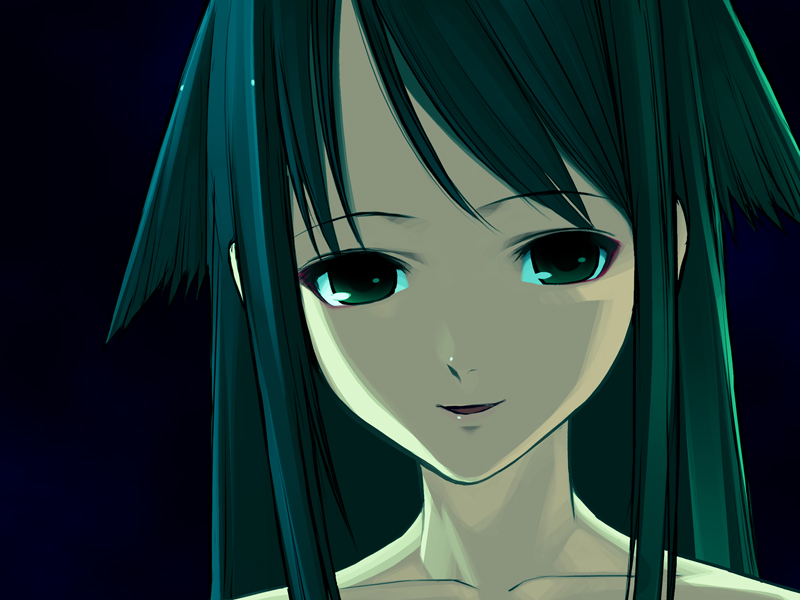
MASSIVE Content Warning. This is an adult visual novel with gruesome imagery, and mature and unsettling themes, including sexual violence and suicide.
(Also, this review does not contain any major spoilers for the story. I wouldn’t want to spoil this game for anyone.)
I don’t think artists should ever feel inhibited by what they want to depict. I don’t care what it is, or why someone wants to make it. If we were to limit the potential for art, I’d argue there is no point to art as a means of expression. People can feel however they want to feel about even the most disgusting of art (or at least, what they perceive as such), but no one should be able to take away an artist’s individual right to create whatever they like.
With that said… This game is pretty fucked up.
Viscerally terrifying, relentlessly disturbing, stomach-churning and revolting in all facets, yet I can’t help but find it beautiful. It creates an abyss that forces unfamiliar and uncomfortable souls away, and leaves a profound impression on those that choose to see it through to the end and watch the abyss stare back at them. Regardless of how you personally feel about it, I believe it is one of most important visual novels ever released, and a strong example of games as art.
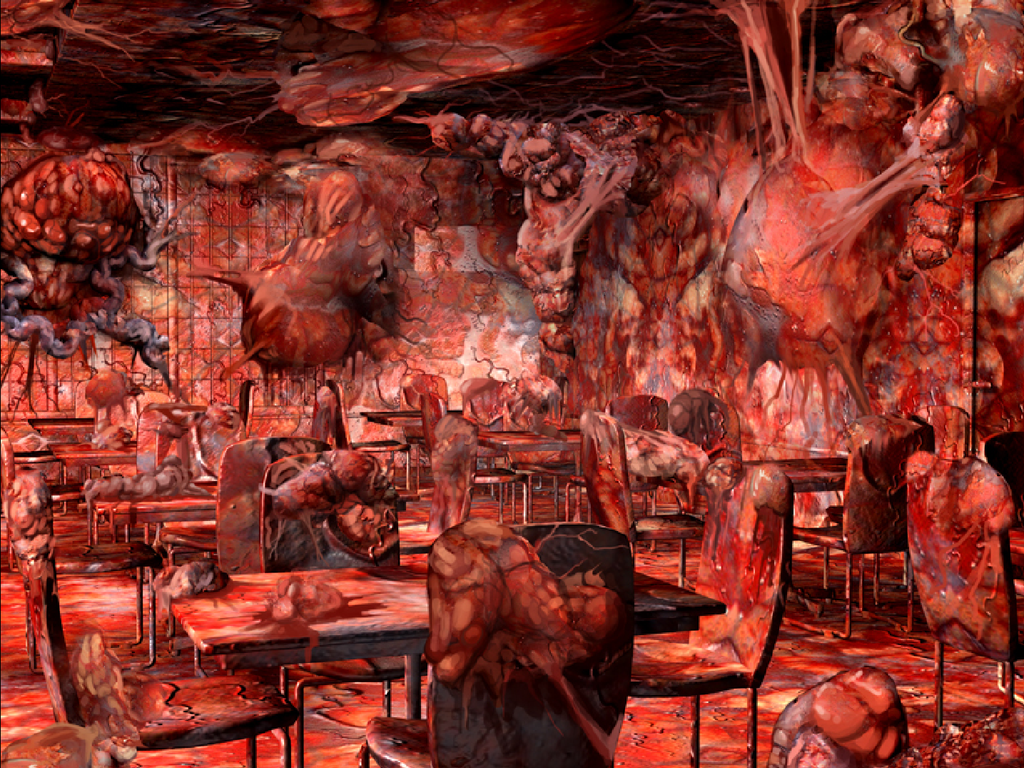
After doing away with the serene main menu music upon starting a new game, you will quickly realize just how much it was meant to lull you into a false sense of security. Saya no Uta is immediately confronting in its vivid and nauseating depiction of the world Fuminori sees on a daily basis. People are nothing but bubbling, screeching mounds of twisted, veiny flesh, and the game assaults your ears with their noises the moment you begin. The drawn-out electric guitar manages to turn an already graphic scene into something that will make your stomach churn. Although its backgrounds are static, they almost undulate with life as you take in each locale decorated with human entrails, blood, excrement, and skin.
The game describes what existence is like for Fuminori in hellish detail. You can practically smell the rot and decay of the world around him. You can feel the slime that sprays from what he once called his friends as it hits his face when they speak. Coupled with Zizz Studio’s score for the game – one that straddles the line between sickening and sublime, much like the rest of the game, through its use of droning electric guitars – the game just feels like something you should have never started playing from start to finish, something you feel like you might get in trouble for playing, and that is compounded by the appearance and depiction of Saya herself.
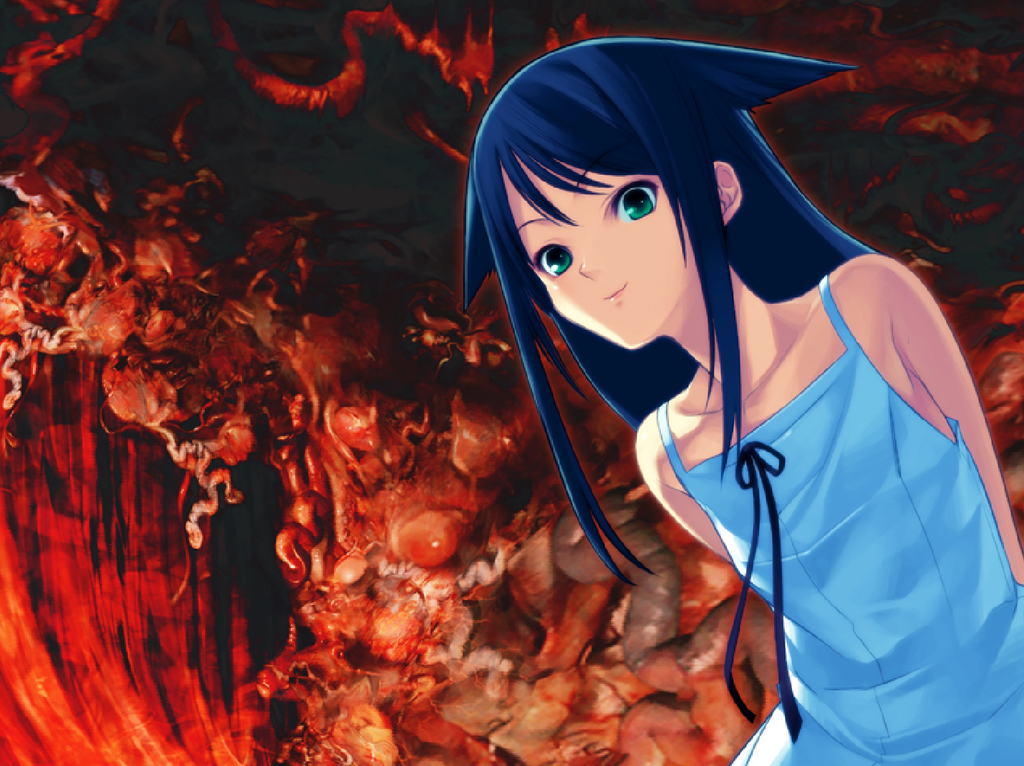
Saya appears as an innocent young girl, who through Fuminori‘s eyes, is a shining beacon in his life amidst the gore he lives amongst every day. He accepts her as a companion, wife, and lover, and the game does not shy away from this aspect. In reality, Saya only appears this way to him, as everyone else that is unfortunate enough to see her only sees the same hulking mass of flesh that Fuminori sees on a daily basis, though the game never reveals her true form to the player or Fuminori. Saya appearing this way only to those psychologically broken enough to see the world the way Fuminori does acts as a commentary on the eroge medium itself. Saya no Uta is framed in such a way that its erotic elements are extremely difficult, if not impossible, to divorce from their context, and should players find these elements titillating – it is a reflection of their own perception of the art. It is just as much a Lovecraftian lolicon work as it is a critique of the lolicon genre, and with Fuminori as the protagonist, indulging himself in her purity (and soon enough, her monstrousness) – the game straddles the line between eroge and horror in a manner I have never seen depicted before.
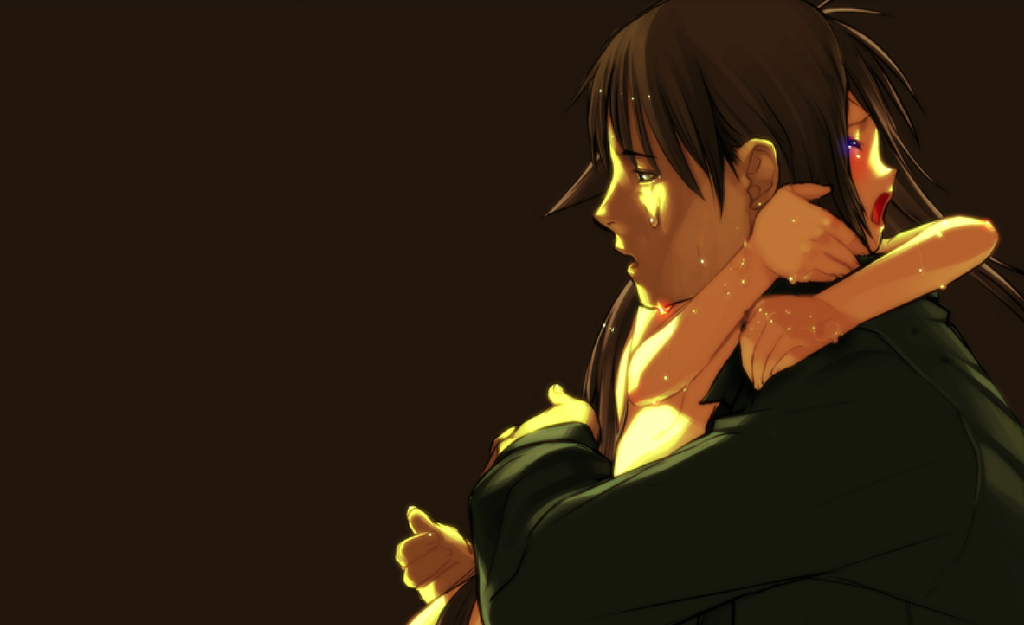
Indeed, this game depicts the downward spiral of a man with nothing left but a being as disturbed as him. One that appears pure only to him, while the rest of the world reeks of death. One acts in self-preservation, in more ways than one, while the other finds salvation amidst the hell he lives in. Both of them are unmistakably evil in the eyes of everyone else living in this world (in fact, Fuminori even reflects on this evil in the quote I included at the beginning of this post), but as players, we can choose to either look on in horror at what transpires, or we can help the two of them along.
How you treat their relationship in your mind is all a matter of perspective, much like Fuminori’s perception of Saya, and for me – I couldn’t help but commit to both. As much as Saya is the abyss staring back at Fuminori, this game is the abyss staring back at me. In fact, some of the imagery and concepts throughout the game were so gruesome that I had to, at one point, blur one of the CGs in order to keep my lunch. I’m usually pretty good about horror, but this game frequently got under my skin, and despite my reaction in the moment – I totally respect the game’s ability to elicit such a reaction.
Without spoiling the choices that can be made, I believe the game’s major endings reflect the player’s own perception of Fuminori and Saya’s relationship. Saya is still a monstrous species to everyone else, as I said, and without going into detail – her behaviour throughout the game reflects this. How the player responds later on can end the game with something befitting of either a tragic love story, or the end of one nightmare, and the beginning of another.
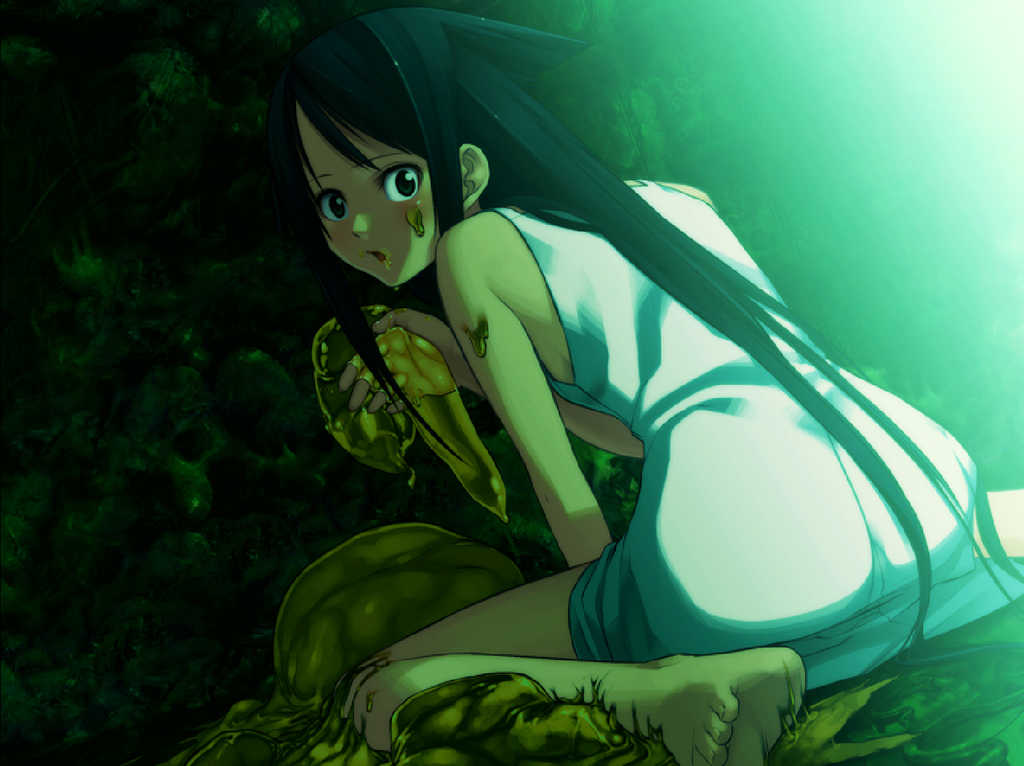
I wish I could go into more detail. Unfortunately, with as much as I have to say about this game, I really don’t feel comfortable turning this into a main channel video. It’s one thing that YouTube is prone to intense censorship of its creators these days, but I also do not want to expose everyone to this game should they not be able to stomach it, or should they not have an open mind about its content. That being said, I have no shame in feeling positively about this game.
Saya no Uta is a game about perspective; just as much as it is about the different ways its main characters view the world and the people around them, it uses its graphic and disturbing content unabashedly as both effective horror, and as narrative fuel in order for the player to decide for themselves how they feel about its characters. It is impossible for just one perspective to truly encompass why this game is such a masterpiece, and therefore – if you feel you are able to stare into the abyss – I encourage you to stare into it, and see if it stares back for you too.
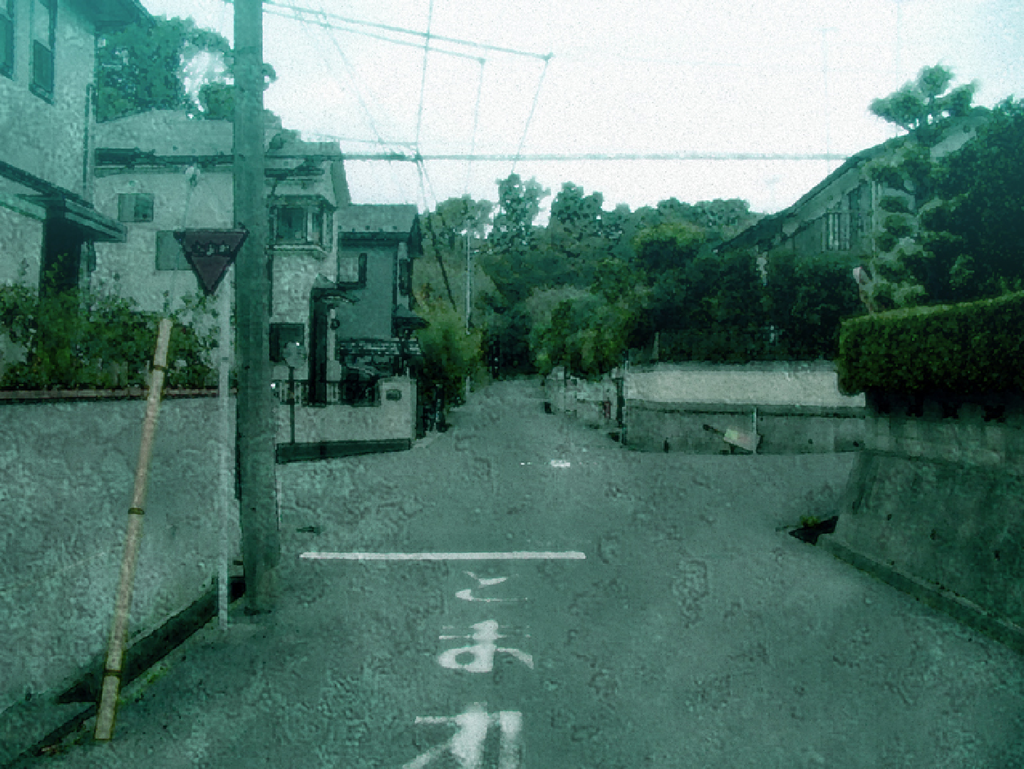
If you have any further questions about my feelings toward the game’s content (as well as anything that happens in the story), I’d be happy to respond in the comments or elsewhere.
Comments (0)