Recommending: Ghost in the Shell (on PS1)
Some of you might have noticed this in both my PS2 and Dreamcast retrospectives, but I grew up an absolute fiend for anime/manga-licensed games. To this day, a part of me still tracks down games based on things I was into when I was a kid (Naruto, Fullmetal Alchemist, etc.), as well as things I’ve watched and read as an adult (Berserk, for example). I play them on my own time, with no expectation of creating videos centered around them (though the Berserk games could end up making for a cool video someday…). I don’t like thinking about everything I experience suddenly becoming “content;” I think I’d actually go insane if I did.
That said, this website gives me the opportunity to chronicle my experiences with some of these games at my leisure, and oh boy, did I play a good one the other day.
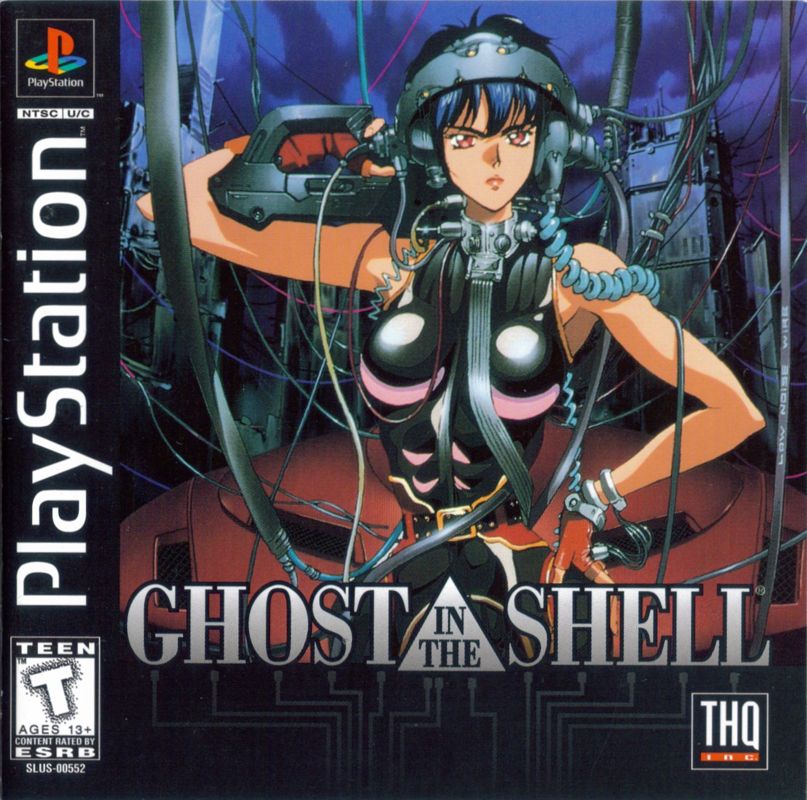
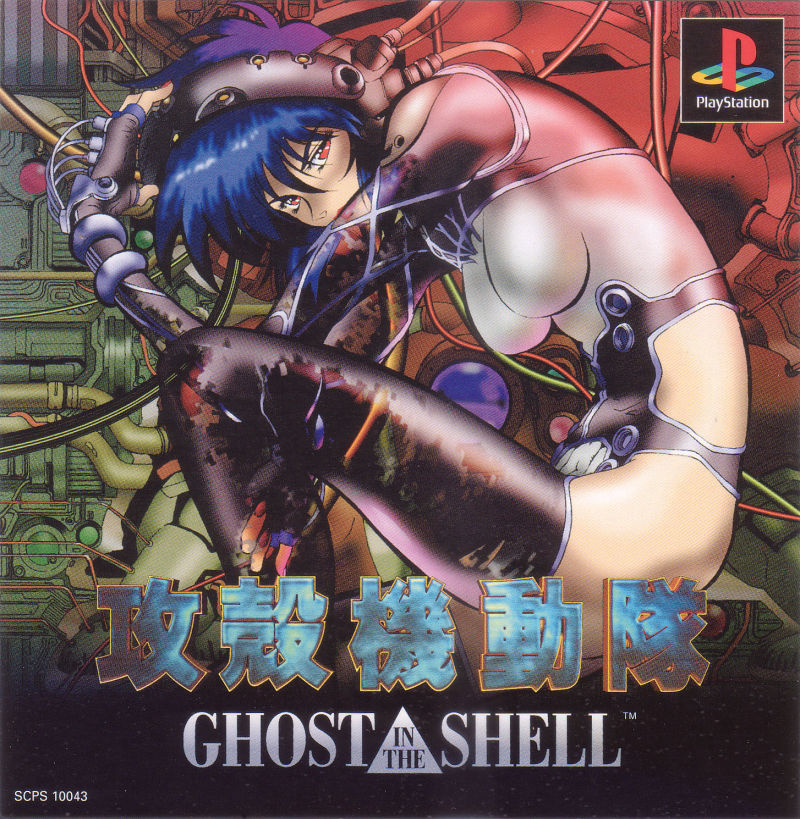
Ghost in the Shell needs no introduction. If you have even a cursory interest in Japanese animation, then you’ve heard of it. Its cerebral plotline and detailed commitment to its atomsphere and dystopian, cyberpunk universe make multiple viewings a requirement to deeply understand its existential themes of consciousness and self-awareness in cyborgs and artificial intelligence – all beautifully personified in Motoko Kusanagi, by the way. That said, it’s a short movie, and it makes for one I have no problems rewatching every now and again in order to interpret (and reinterpret) what it delivers on.
In regards to the game, however – I have bad news, and I have good news. The bad news is that the game adapts the film’s identity at a surface level, meaning that there isn’t a whole lot of that subject matter that make Ghost in the Shell what it is in the game. The good news is that the game is awesome anyway.
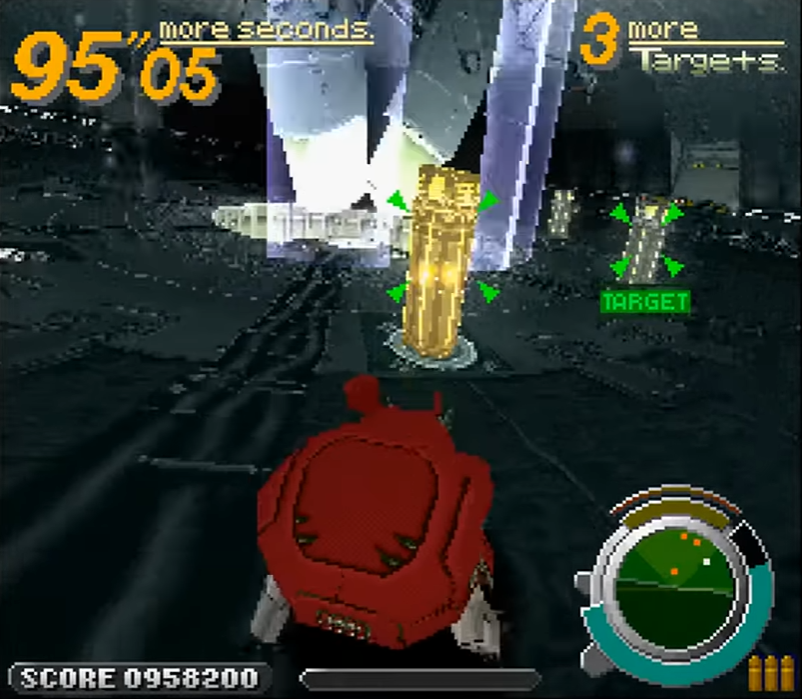
Ghost in the Shell was developed by Exact, known for creating Jumping Flash – one of the earliest 3D platformers for a home console. From playing that game for my Super Mario 64 video, I could tell right away that they had a firm grasp – quite early on, mind you – over how to execute movement in a 3D space. A first-person perspective, precise controls, panning the camera underneath you when you jump around and need to see where you’re going to land – the game had everything. And a couple of years later, in 1997, Exact applied what they’d learned to this mecha action game where you control a rookie Fuchikoma, and it plays beautifully.
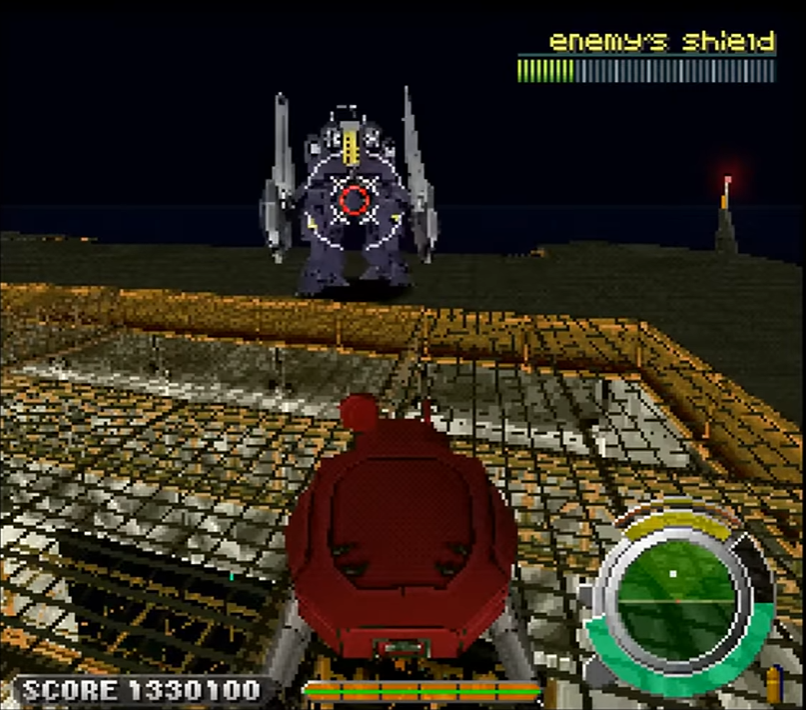
Much like Bulk Slash, a game I covered in my Sega Saturn retrospective: The game uses tank controls, yet it implements them effortlessly to the point where that method of control becomes second nature. The L1 and R1 buttons allow you to not only strafe as you shoot enemies, but you can also press both of them at the same time to boost forward or backward, in addition to your typical tank-based movement setup, which gives you a great deal of control during the action. Additionally, you can strafe and walk onto walls and ceilings like a spider, allowing you to take out enemies and objectives from any angle, and the game features a dynamic first-and-third-person camera that shifts depending on the context and terrain for easier shooting and movement, and you can toggle the perspective at any time with the Select button.
This game was not only far ahead of its time, but it still plays like a dream thanks to its innovations and unique ideas. Also, attacking enemies doesn’t limit you to just firing a piddly little machine gun. You can also hold the Square button for a certain amount of time to target multiple enemies (think Panzer Dragoon), and you can collect grenades throughout the levels to use for quick AOE damage when you feel you need them. Doing all of this in conjuction with the game’s stellar movement systems make for some of the most solid 3D action on the PS1, and I’m dead serious about that. You’ll be dashing around, dodging projectiles, locking on to anything that stands in your way strategically, drifting up and onto the walls and ceilings, zooming through open areas on a time limit, sometimes even platforming as an obvious callback to what the team learning on Jumping Flash, and it all feels stupendously satisfying.
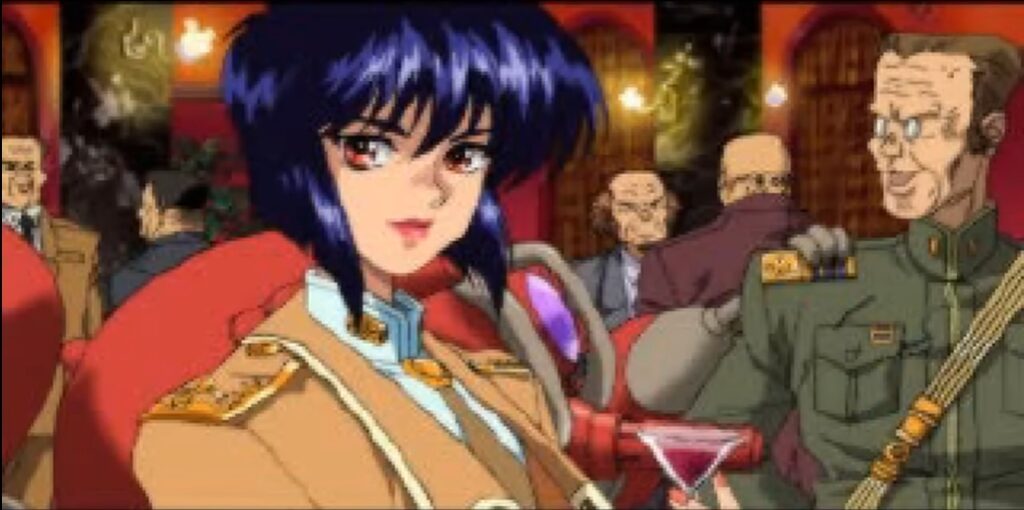
Of course, the novelty of it taking place in Ghost in the Shell’s universe is part of the reason why it was so compelling to play through to begin with, but it also shines in its authenticity to that universe – even managing to get Ghost in the Shell’s original author Masamune Shirow to contribute to the basic plot and art design of the game, and all of the environments feel well-realized, as though you are stepping into the gorgeously grimy streets of Niihama yourself. Also, the animated cutscenes that act as interstitials between levels were created by Production I.G., the studio that animated the film, so it feels like an extension of the film itself. The personal touch of you playing through the game as a rookie mech with a cute smile adds to that feeling, and although this is a simple adaptation to me when I look at it from a writer’s standpoint, it is a successful adaptation by virtually ever other metric, and it is impossible for me to deny the charm of stepping into this world through the visor of this mech.
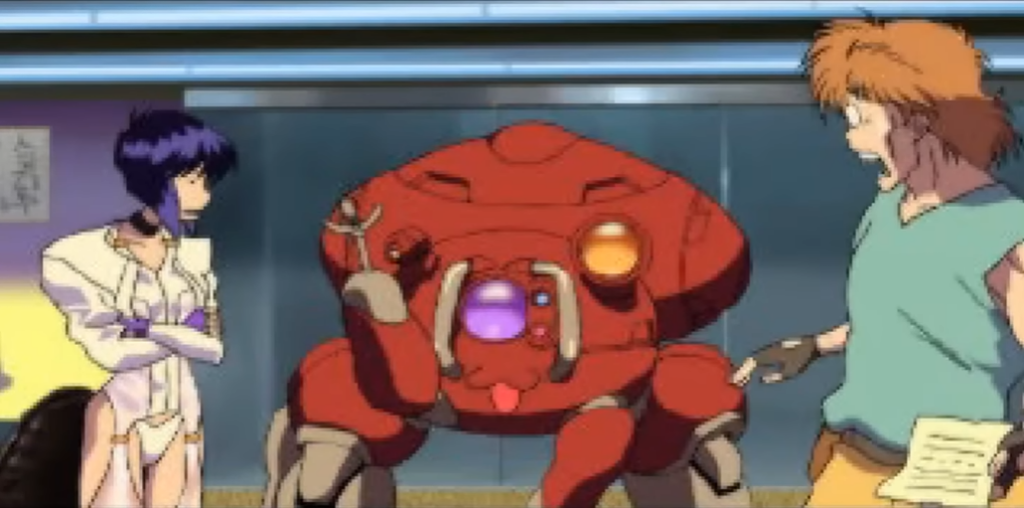
All that being said, the aspect of the presentation that completes this interpretation of Ghost in the Shell is its well-rounded, electronic dance soundtrack. This shit fucking slaps. Featuring contributions from various electronic artists, it is perhaps the perfect sort of soundtrack to not just compliment Ghost in the Shell’s world and action, but also to truly realize it. If all of this game’s visual identity and game mechanics were to have a sound, it would be the very sound they chose. At times, it almost feels as though it is synchronized with the game itself, observable in how the Fuchikoma infiltrates the sewers in time with this song.
The soundtrack is perfect and an incredible collaborative EDM album on its own, which is no doubt why it was released through Sony Music Entertainment Japan as a soundtrack album in 1997.
Ultimately, there are things I lament about this game. Much like the film it is based on, it is quite short. Its twelve missions can be completed in an hour if you know what you’re doing, and to that end – some might find the game easy. At first, when you’re just getting to grips with the Fuchikoma’s controls, you might find yourself dying and forcing level restarts when up against bosses, but once you truly know how to play the game well, you can probably get through most of the levels without dying. At least, that’s how I fared. Personally, I didn’t have an issue with the difficulty of the game in the slightest. It felt like just enough for me to feel adequately challenged and satisfied. I wish so desperately that the game received a spiritual successor or sequel somehow, but y’know what? That is precisely what makes this game so special. Its brevity, and its stellar execution. Something tells me I’m going to be revisiting this game a few more times in the coming years.
I love these 90’s anime style games. I just bought Grandia and it’s in the mail (I sent it to the wrong address lol). I’ve probably said this a few times but I think you’d enjoy the Lunar games, Liam. They have that familiar anime aesthetic like Ghost in the Shell, but both games are original stories. I freaking love the Complete versions on the PS1/Saturn. It’s got good voice acting, memorable characters, and oh my goodness the songs. Both games had songs performed by Jenny Stigile. And her performance’s really added to the immersion of the games. Sorry I’m going on a tangent. I just want more people to experience the joy of the Lunar games.
Also got that nice manga inspired art style and closer to the major’s original characterization! Here’s hoping the science saru adaptation is good
Just found this site from your Dreamcast retrospective vid. And I gotta say, this is nice. Oh, and I gotta play this game but I know of this game’s OST.
I’ve always been a fan of Ghost in the Shell, but only knew there was a game based off of it through your videos and other online exposure. However, since I’ve read this glowing review, I believe I’m more warm and open to the idea of playing this, and other anime tie-in games at large! I can’t wait to blow my mind over this soundtrack. I’m also going to second what Colby said here^^ which is the Lunar games. Oh man, Liam I really think you’d dig these games, HARD. I’ll just say the the music is enrapturing and the story is investing. Definitely gives those a try!
Oh hey another Lunar enjoyer. Which one is your favorite of the two games? I think I like Lunar 2 just a tad bit more.
Cautiously optimistic for the reboot in the summer if anybody can pull it off, Wcience Waru can!
Hey, Colby! Sorry for the late response, life has been excruciatingly busy these past few weeks. Nice to see another fan in the wild! Out of both games, I think I like both of them equally, for differing reasons. I really love the simplicity and earnest effort to tell a “traditional” fantasy story as best as they could possibly make it, as well as the music and the characters. That being said, Lunar 2 takes everything the first game did and expands upon what made it great, and the takes it to the next level. The music, the story (which takes a bit of a darker turn than the original,) is truly investing and made me fall in love with the world and its inhabitants. These two in comparison to each other is like a lot of games that have a 1-2 punch with the first pair of entries!
Going from the movie to seeing a robot with a smiley facce that’s so cute it could melt your heart is quite the contrast to someone who only watched the movie.